Online Bacteria Analyzer (OBA)
Precision Fluidics System
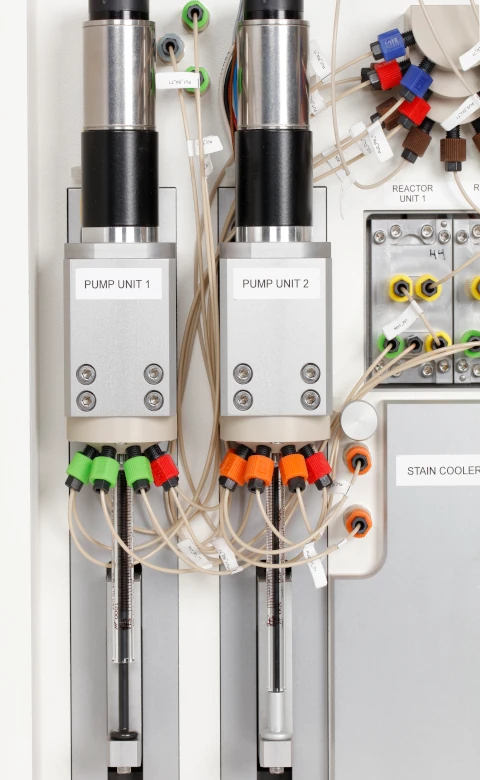
To transport and precisely dose minute volumes in the microliter range, we exclusively use syringe pumps and valves with extremely low dead volumes specifically developed for this application.This ensures an exact sample volume, and measurements are performed with precise volumetric accuracy (cells per ml).
The syringe pumps operate in perfect synchronization for the mixing process and flow cytometric measurement with hydrodynamic focusing.
Since the fluids are constantly propelled during measurement and mixing processes, the likelihood of cell-cell interactions and potential blockages is significantly reduced.
Sampling Points
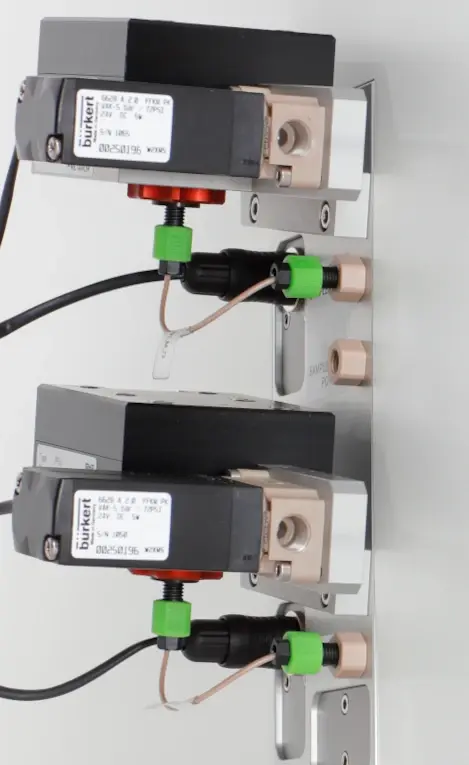
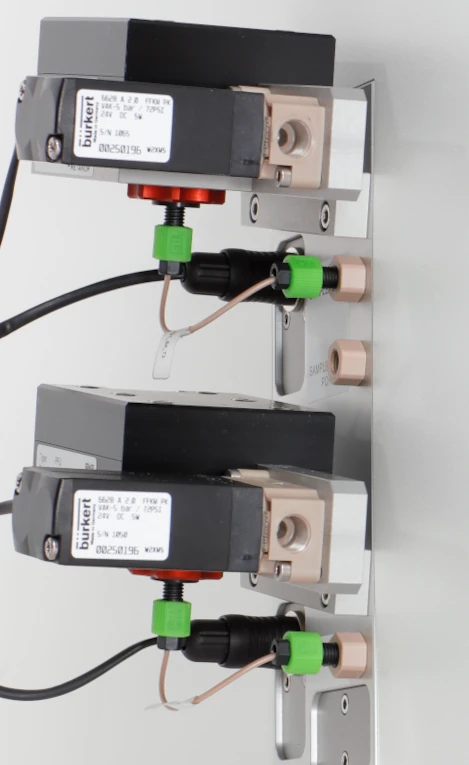
For the reliable use of flow cytometry (FCM) in an industrial environment, an absolutely bubble-free sample collection is crucial. Air or gas inclusions lead to measurement artifacts, unstable signals, or even misinterpretations, as they act like particles in the measuring cuvette or disrupt the volume flow.
The sampling unit developed by ONTRONIX enables the reliable, direct use of flow cytometry in industrial processes. An integrated particle filter protects the measuring technology from contamination, while automatic filter backwashing ensures uninterrupted, continuous operation.
OBA can be configured with up to four sampling units, enabling it to analyze and monitor up to four different samples. This allows for comprehensive process control while maintaining high flexibility.
Optical Mechanical Design
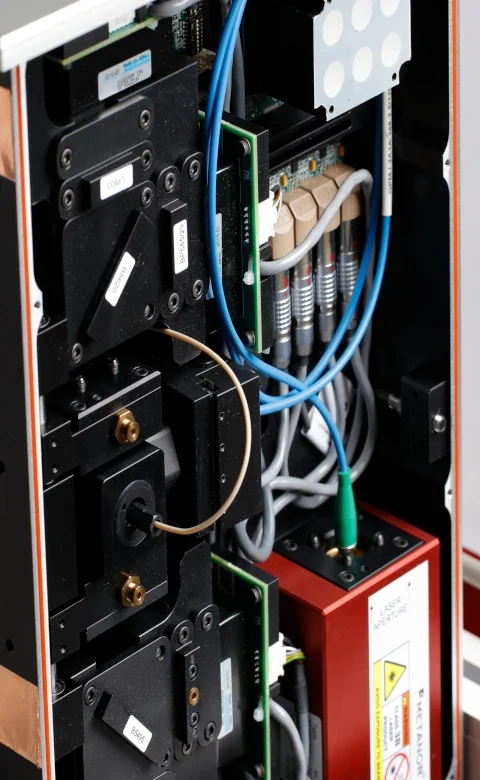
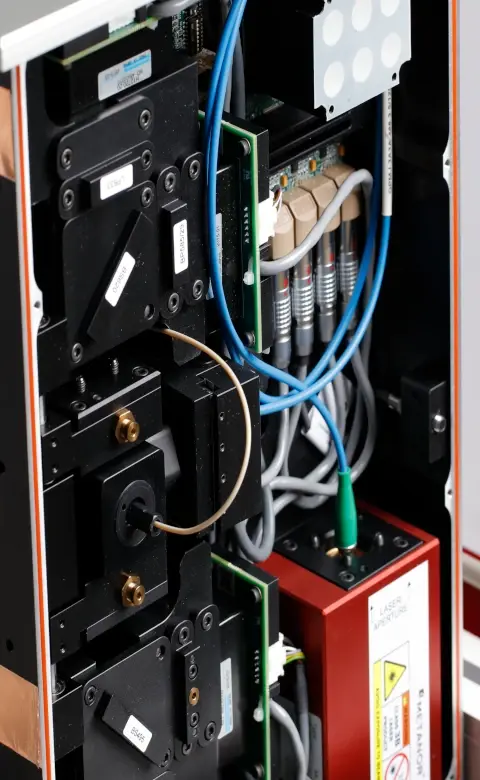
To ensure the reliability of the delicate optical flow cytometry detection in often harsh industrial environments (vibrations, dust, significant temperature fluctuations), we developed a monoblock design.
This allowed us to achieve the necessary mechanical stability and reliability for the measurement technology, originally developed exclusively for laboratory use, even in industrial settings.
How OBA Works
OBA requires at least 20 minutes for a complete analysis. During this time, the entire automated measurement process takes place: from sample collection through staining and incubation to the actual measurement.
OBA thus enables reliable and continuous monitoring of critical process parameters. Depending on the configuration and operating conditions, 50 to 70 measurements can be performed daily.
OBA uses true flow cytometry (FCM) for highly precise cell analysis. In a flow cell, the stained cells are precisely aligned and arranged in an ordered row using a flow of fluid (jacket fluid). The cells pass through the light beam individually, allowing each cell to be reliably detected and analyzed. The result is a particularly accurate and reproducible measurement, even with complex water samples.
A single measurement can yield a maximum of 30 million events per ml. Without background noise, this corresponds to approximately 20 to 25 million bacteria.
OBA measures all bacteria and cells that can be penetrated by the dye marker SYBR Green I during incubation. Using propidium iodide as a second marker, OBA can distinguish intact (living) from dead cells – for example, after ozonation or chlorine cleaning.

Sampling using an overcurrent filter

Automatic dilution at high cell counts to ensure measurement accuracy

Addition and mixing of a DNA/RNA fluorescent dye for cell labeling

Incubation (5–15 min): Binding of the fluorescent dye to the cells

Measurement of the incubated sample using flow cytometry

Analysis and archiving of the measurement data, as well as event-based dispatch of alerts and alarms
Measurement Results
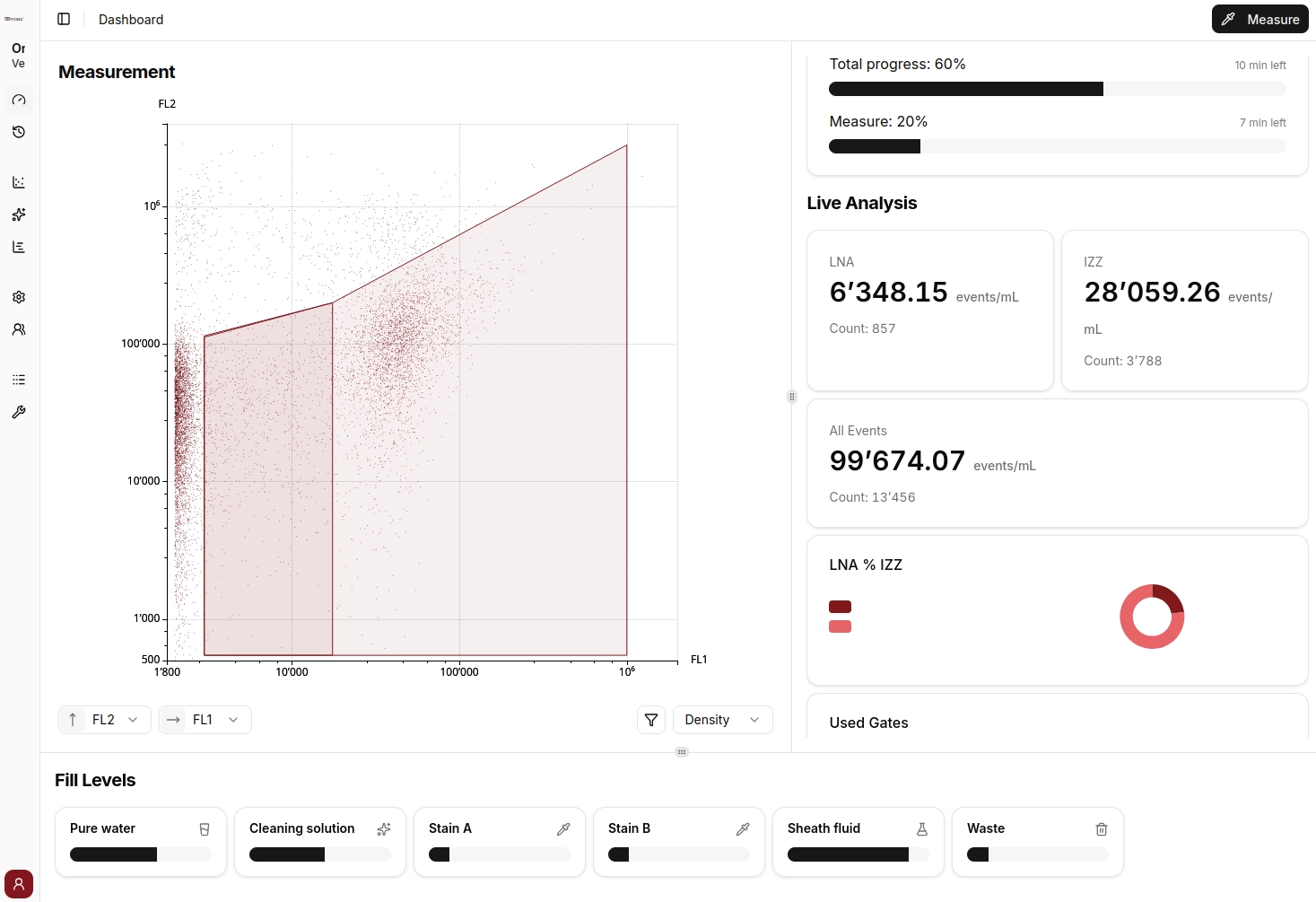
Based on validated and proven parameters – total cell count (TCC), intact and dead cells, bacteria with high (HNA) and low nucleic acid content (LNA) as well as results from freely definable gating clusters – the scatter plot provides a comprehensive data set.
This enables detailed and continuous monitoring of microbiological processes on site.
Measurement Parameters
The following parameters can be measured with the Online Bacteria Analyzer:
TCC
Total cell count
HNA
High nucleic acid cell count
LNA
Low nucleic acid cell count
LDC
Live/dead count (IZZ + DZZ)
ICC
Intact cell count
DCC
Damaged cell count
Gated Clusters
Results from arbitrarily defined gating populations